
Magic Books by Talia Felix

Getty Museum

I recently went to the Getty Museum in Los Angeles for the first (and sadly probably last) time, due to circumstances. But still, one of the top art museums in the world! Here are a few highlights of things I saw:
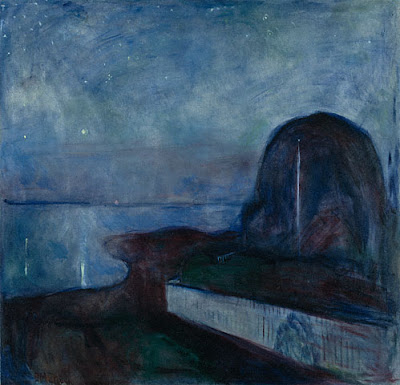

Starry Night by Edvard Munch.


Faun and his Family by Lucas Cranach -- I think this one might contain mummy black for the black portions.


Still Life with Fruit by Jan van Huysum -- it's hard to see in this miniature version, but there are insects crawling all over the fruit and flowers in this picture.


Christ on the Cross by El Greco.


Astronomer by Candlelight by Gerrit Dou -- this thing is amazingly small for how detailed it is.

I've seen some other fantastic museums around the world lately as well. Stay tuned for tales of the Louvre and the Victoria and Albert!
Want professional spellcasting? Visit Hoodoo Online for services, or browse my books on Amazon.

Popular posts from this blog

Magical Hoodoo Baths - The Original Hoodoo and Voodoo Bath for Luck, Love and Success

One beginning in the tradition of hoodoo should know about the importance of baths. They are vital tools in hoodoo work and cannot be dispensed with.  Many people nowadays don't have bathtubs, and some adaptation can be achieved by way of showers. Other people use a large bowl or bucket of water to pour on themselves in place of a spiritual bath. In olden times, and also in some places today where water on tap isn't common, people will perform their spiritual baths in a river or pond outdoors.  A spiritual bath is similar to a regular bath, but with certain key differences. Spiritual baths are not meant primarily for physical cleansing and so washing items like soap might be taboo depending on the exact bath type. However there are some types of magical bath that do use the multitasking property of soap or other cleansers, and in those cases the cleaning aspect is appropriate to the work. There is some controversy around washing the hair in a spiritual bath. Many people don...

The Ultimate Hoodoo Herbal Incense Guide

 Myrrh The other day I made a bath recipe for myself using some artificial myrrh oil (real myrrh essential oil being quite expensive -- about $160 a half ounce as of this writing.) Sniffing it, it called to mind so many other spells that I've done that I realized -- this is THE smell of hoodoo. American hoodoo magic, with its blend of African, Indigenous, and European traditions, has a long history of utilizing various herbs, roots, and materials to create potent spells and rituals. One such ingredient that holds a significant place is myrrh. It is not a native plant to the Americas: commiphora myrrha is native to the Arabian penninsula and Africa. It appears often in the Bible, and because of this was adopted into European high magical traditions. As I mention in my book Conjuration , incense wasn't much used in American hoodoo till the early 20th century, when the "catalogue culture" of De Laurence and others brought to it more high magical tradition and incorpor...

Occult Mysteries of Candle Omens: The Surprising Truth About Spellcasting Success and Misleading Signs

One of my most consistently popular posts on this blog is the Candle Omens post, indicating many many people want to know about how to read omens for their spells through the augeries of wax or flames. When I perform spellcasts for clients , if the work I have done involved a candle spell, I will usually report on the condition of the flames, smoke or interesting activity with the wax.  And yet, how valid is this for determining spell outcome? In my own experience, I have had candles that burned badly result in brilliant successes, and candles that burned well lead to dud results.  The first thing to keep in mind about reading omens in candles it that it really shouldn't be done if you are inexperienced in candle burning, OR if you are using an unfamiliar brand of candles . In both cases, it can lead to falsely assuming a normal event is something abnormal or significant. For example, there is a particular type of pullout candle which I have to go out of my way to ...

Perfume, Cologne, and Its Use In Hoodoo

The original recipe for cologne was reputedly given to St. Elizabeth of Hungary by an angel -- the concoction was known as "Hungary Water" and was used primarily as a medicine, rather than just a mere fragrance. Charles Godfrey Leland remarked that it therefore was appropriate hoodoo practitioners would use such a substance for feeding their conjure bags and other talismans. The term cologne actually comes from a later preparation, Cologne Water (named for the German city.) The original Cologne Water is a spirit-citrus perfume launched in 1709 by Giovanni Maria Farina (1685–1766), an Italian perfume maker from Santa Maria Maggiore Valle Vigezzo, Italy. In 1708, Farina wrote to his brother Jean Baptiste: "I have found a fragrance that reminds me of an Italian spring morning, of mountain daffodils and orange blossoms after the rain". He named his fragrance Cologne Water, in honour of his new hometown. The Original Cologne Water composed by Farina was used on...

Sugar and Sweetener - Vital Ingredients for Traditional Hoodoo and Witchcraft Magic

Sugar spells are everywhere these days. People know you can “sweeten someone up,” and if you poke around online for five minutes, you’ll find love spells that ask you to write a name on a paper and put it in a jar with sugar, honey, syrup, or a piece of candy. It’s not just popular — it’s practically its own genre. But the real history of sugar in hoodoo is a little deeper, and as always, a little weirder. Traditionally, sugar was used to sweeten someone toward you — whether for love, kindness, better treatment, or even to grease a boss’s attitude at work. You’ll find older spells that use sugar to make a judge lenient or to keep someone from being angry. What’s rarely mentioned outside the tradition is that the type of sugar used could be significant. Yes, really. In older hoodoo practice, sweeteners were sometimes matched to the race or skin tone of the person being targeted. Molasses - thick and dark, was typically used if the person was Black. White sugar - for a white person. Hon...