Magic Books by Talia Felix

Sounds of the Orisa: Rattles from the Lukumi Tradition

There's a largely empty outlet mall near my house. Some of the spaces are rented out by non-shops -- for example there is a theatre company in one space, and for a while there was an estate sale business taking one of the units.

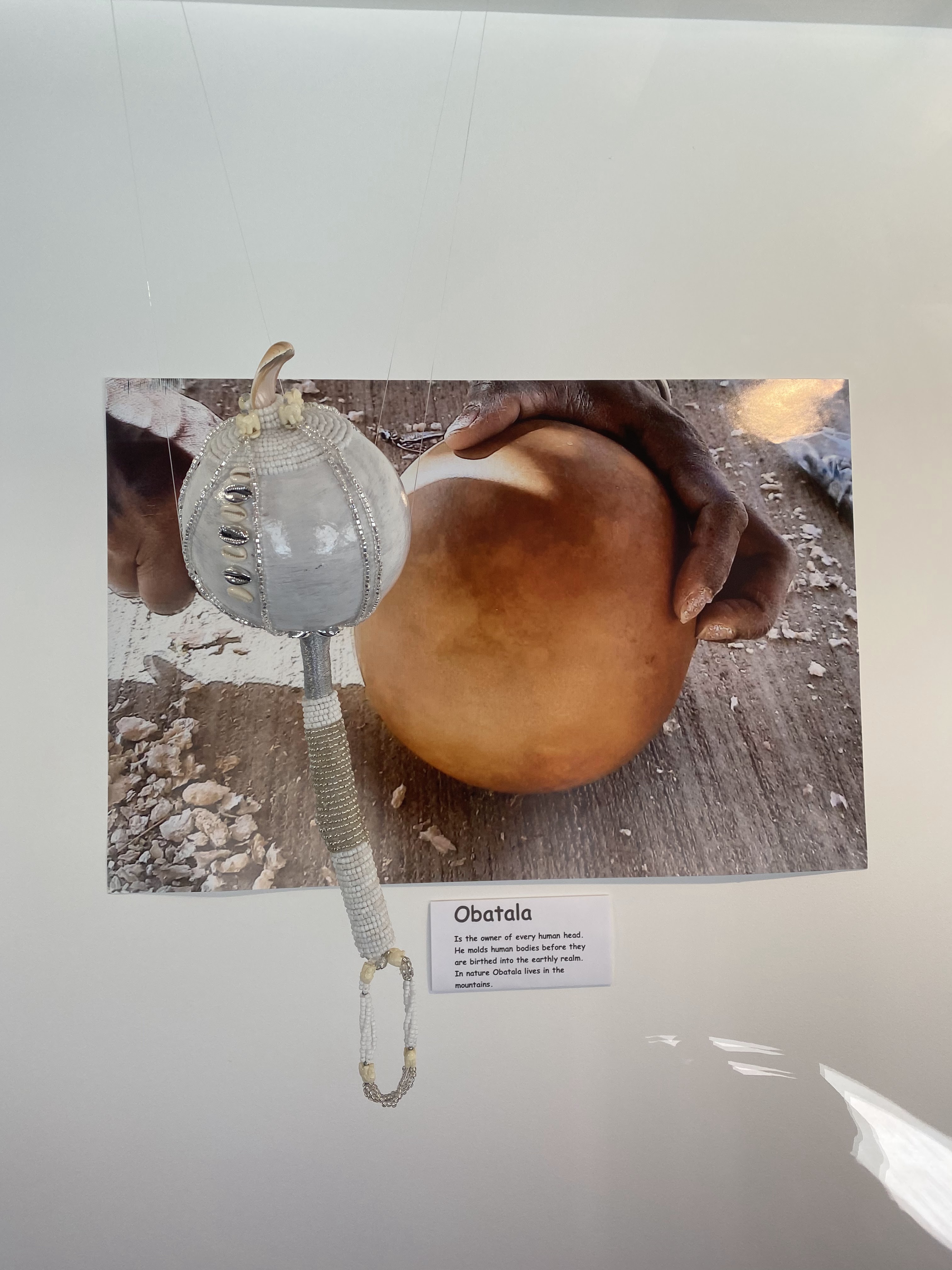
Last time I visited, there was an art gallery in one of the units. It seemed to be locked up (maybe only open by appointment?) but in the windows were a series of Lukumi rattles.

lukumi traditional rattle for olokun


lukumi traditional rattle for yemaya

lukumi traditional rattle for obatala


The paper in the window indicated they are by Tintawi Kaigziabiher.

Want professional spellcasting? Visit Hoodoo Online for services, or browse my books on Amazon.

Popular posts from this blog

Magical Hoodoo Baths - The Original Hoodoo and Voodoo Bath for Luck, Love and Success

One beginning in the tradition of hoodoo should know about the importance of baths. They are vital tools in hoodoo work and cannot be dispensed with.  Many people nowadays don't have bathtubs, and some adaptation can be achieved by way of showers. Other people use a large bowl or bucket of water to pour on themselves in place of a spiritual bath. In olden times, and also in some places today where water on tap isn't common, people will perform their spiritual baths in a river or pond outdoors.  A spiritual bath is similar to a regular bath, but with certain key differences. Spiritual baths are not meant primarily for physical cleansing and so washing items like soap might be taboo depending on the exact bath type. However there are some types of magical bath that do use the multitasking property of soap or other cleansers, and in those cases the cleaning aspect is appropriate to the work. There is some controversy around washing the hair in a spiritual bath. Many people don...

Paper-in-Shoe Spells

A popular and very traditional hoodoo spell, often used for any situation where you need to control someone with magic , is the namepaper-in-shoe spell. It's very easy: you write the target's name 3, 7, or 9 times on a paper (depending on intent and who's giving instruction) then fold it up, sometimes after dressing it with oils or powders, then put it in your shoe. This "keeps the person underfoot" or "stomps out the trouble" or "puts pressure on them" or any other number of metaphors. I have had this work several times over the years. In one instance, I was working for a very unpleasant boss, on a short-term job. It was the last day, and I only had about 3 hours of work left on the project; and I wanted him to up my pay for the day since it almost wasn't worth the trip across town for the amount he was paying me, for only 3 hours. He was very reluctant. So I wrote his name 3 times on a 5-dollar bill he'd given me, and dusted it...

Sugar and Sweetener - Vital Ingredients for Traditional Hoodoo and Witchcraft Magic

Sugar spells are everywhere these days. People know you can “sweeten someone up,” and if you poke around online for five minutes, you’ll find love spells that ask you to write a name on a paper and put it in a jar with sugar, honey, syrup, or a piece of candy. It’s not just popular — it’s practically its own genre. But the real history of sugar in hoodoo is a little deeper, and as always, a little weirder. Traditionally, sugar was used to sweeten someone toward you — whether for love, kindness, better treatment, or even to grease a boss’s attitude at work. You’ll find older spells that use sugar to make a judge lenient or to keep someone from being angry. What’s rarely mentioned outside the tradition is that the type of sugar used could be significant. Yes, really. In older hoodoo practice, sweeteners were sometimes matched to the race or skin tone of the person being targeted. Molasses - thick and dark, was typically used if the person was Black. White sugar - for a white person. Hon...

Ammonia - A Spiritual Cleansing Agent for Magick

Ammonia is a strong cleansing agent in hoodoo magick, both physically and spiritually. In Edwardian times it was advised as an old home remedy for a nerve tonic (see recipe below.)  "Household ammonia" or "ammonium hydroxide" is a solution of NH3 in water. Household ammonia ranges in concentration from 5 to 10 weight percent ammonia. The Romans called the ammonium chloride deposits they collected from near the Temple of Amun (Greek Ἄμμων Ammon) in ancient Libya 'sal ammoniacus' (salt of Amun) because of proximity to the nearby temple of Amun, the chief god of ancient Thebes. Salts of ammonia have been known from very early times; thus the term Hammoniacus sal appears in the writings of Pliny, although it is not known whether the term is identical with the more modern sal-ammoniac (ammonium chloride). In the form of sal-ammoniac (nushadir) ammonia was important to the Muslim alchemists as early as the 8th century, first mentioned by the arab chemist...

The Ultimate Hoodoo Herbal Incense Guide

 Myrrh The other day I made a bath recipe for myself using some artificial myrrh oil (real myrrh essential oil being quite expensive -- about $160 a half ounce as of this writing.) Sniffing it, it called to mind so many other spells that I've done that I realized -- this is THE smell of hoodoo. American hoodoo magic, with its blend of African, Indigenous, and European traditions, has a long history of utilizing various herbs, roots, and materials to create potent spells and rituals. One such ingredient that holds a significant place is myrrh. It is not a native plant to the Americas: commiphora myrrha is native to the Arabian penninsula and Africa. It appears often in the Bible, and because of this was adopted into European high magical traditions. As I mention in my book Conjuration , incense wasn't much used in American hoodoo till the early 20th century, when the "catalogue culture" of De Laurence and others brought to it more high magical tradition and incorpor...